
It all began with the intuition of a man who, after a brief yet intense journey to Burgundy, came to understand that wine is far more than a simple fermented plant-based liquid. It is a product of the land and, as such, expresses the ever-changing, almost ephemeral nature of the soils in which the vines take root.
Upon returning home, he began to study not only the vine itself, but above all the soil: exposures, ascending air currents, the intensity and duration of sunlight, and average temperatures. In essence, all those factors that would, over time, prove fundamental to the mission of every vigneron: to produce grapes as close to perfection as possible, in harmony with the character of each vintage. He ultimately became the greatest authority on grapes in Barolo and Barbaresco, able to anticipate the quality and distinctive character of a wine from its very inception, simply by tasting the grape in its purest, most elemental form.
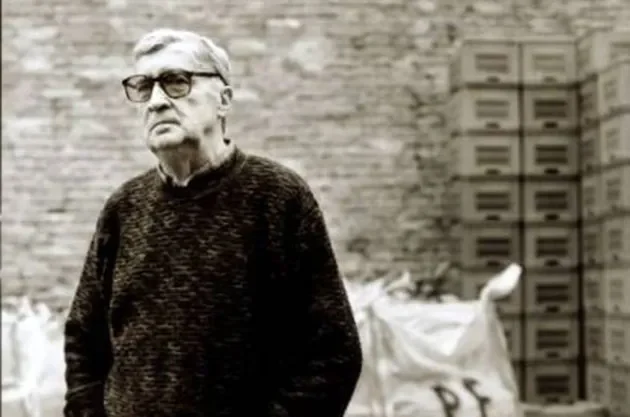
Bruno Giacosa, a pioneer of Italian wine. (Image credit: Armit Wines)
Harvest after harvest, the variables changed, yet the result in the glass remained consistently remarkable, different, certainly, but always luminous, intense, and refined. In this way, the most expressive vineyards were identified, along with the finest zones and subzones. With boldness, he chose to vinify these grapes separately, abandoning indiscriminate blending in favor of capturing the most subtle and authentic nuances of each site.
This is the passion, the sacrifice, the determination, and the instinct that define Italian genius, the same spirit we recognize in Leonardo, Valentino, and Enzo Ferrari. He embodied that very essence, as if destined, by chance or by divine will, for the world of wine.
That man was Bruno Giacosa. And, as Angelo Gaja once said, he was one of the founding fathers of Italy’s modern wine renaissance. Luigi Veronelli, the influential food critic and journalist of the time, was among the first to sense Bruno’s talent and to recognize in him the potential driving force behind this great transformation. It was thanks to this insight that the individual crus of Barolo and Barbaresco came to assert themselves, first locally and then on the world stage, as the true aristocracy of Italian wine.